

Imagine your mechanic calls with a repair estimate that’s much larger than expected. Your car still gets you where you need to go, but now you’re wondering whether another repair makes sense, or whether it’s time to move on.
There’s no single dollar amount that answers that question for every driver. The right choice depends on the repair, the condition of the rest of your car, what a dependable replacement would actually cost, and how well the vehicle still fits your life.
For drivers comparing used cars in Kitchener and the Kitchener-Waterloo area, it helps to make the decision with clear numbers, not panic, pressure, or money you’ve already spent.
Compare the full cost of keeping and replacing
Imagine you’re comparing a repair estimate with the value of your car. That’s a useful first step, but it isn’t the whole calculation. A car’s current value is not the same as the cost of replacing it with reliable transportation.
Start by considering three figures:
- The repair: Include parts, labour, taxes, and any related work needed to complete the job safely.
- The car’s current value: Look at what it may be worth in its present condition, not what you paid for it years ago.
- A realistic replacement cost: Include more than the advertised price. A replacement may bring sales tax, registration and plate costs, an insurance change, financing interest, and maintenance or repairs of its own.
Then compare what each option could cost over the next year or two. If you repair the car, are other major jobs likely soon? If you replace it, how much will you spend to buy and maintain a different vehicle?
Ontario’s vehicle and driver fees and consumer information about buying a vehicle can help you identify some costs to check. Your exact expenses depend on the vehicle and transaction, so confirm them before making a decision.
Treat the 50% rule as a warning, not a verdict
Imagine a repair bill approaching half the value of your vehicle. That’s a reason to pause and compare your options, but it doesn’t automatically mean you should sell.
The so-called 50% rule can be a useful prompt to look more closely. Its weakness is that it ignores what happens after the repair. If the car is otherwise sound and the repair addresses one isolated problem, the expense may give you more dependable service for less than replacing the vehicle. But if several expensive repairs are gathering on the horizon, that same bill may be the start of a costly pattern.
The percentage can also mislead you if you focus on the wrong comparison. A repair that’s high relative to your car’s resale value may still cost much less than buying another vehicle and taking on its taxes, insurance changes, and possible loan payments.
Think of the rule as a dashboard warning light: it tells you to investigate, not which way to turn.
Ask what your car needs, and what you need from it
Imagine your car could be repaired tomorrow. Would it still suit the way you drive, the people you carry, and the distance you need to cover? Your personal plans belong in the decision alongside the mechanical facts.
Ask yourself:
- How much longer do you realistically plan to keep this vehicle?
- What other repairs or maintenance may be due soon?
- Does it still fit your family, cargo, accessibility, and commute needs?
- How much have you spent on repairs this year, and are those costs part of a continuing pattern?
- If you keep it, would you have enough confidence in it for the trips you need to make?
Money already spent is gone either way, so don’t keep a car only to “get your money’s worth.” But the repair history does matter as evidence. Several unrelated problems in a short period may point to a pattern; one well-understood failure on an otherwise maintained car may not.
Account for the costs that don’t appear on an estimate
Imagine the repair gets you back on the road, but you spend every week wondering whether the car will start. That worry has a real effect on your life, even if it doesn’t appear on an invoice.
An aging vehicle can bring unpredictable breakdowns, missed work or appointments, towing, and the hassle of arranging alternate transportation. It may also use more fuel than a newer, more efficient option. And if a problem affects a safety system, delaying a necessary repair isn’t a sensible way to save money.
Replacing a car has its own less-visible costs. Beyond the purchase price, you may face taxes, registration, insurance changes, borrowing costs, and immediate maintenance needs. A replacement may also require a safety inspection or other work before it’s ready for your use. An advertised price or monthly payment alone won’t show the full picture.
If you’re considering financing, compare the total amount you’ll pay over the term, not just the monthly figure. A lower payment can mean a longer loan and more interest.
When fixing it may be the sensible choice
Imagine your vehicle has one major problem, but the rest of it has been maintained and checks out well. Repairing it may be the practical choice if the work solves the main issue and leaves you with a car you still trust.
Keeping the vehicle is often worth considering when:
- The repair is a specific, diagnosed problem rather than one of several accumulating failures.
- The body, structure, and other major systems are in reasonable condition.
- You know the vehicle’s history and have kept up with maintenance.
- The estimated repair and expected near-term work compare favourably with replacing it.
- It still fits your day-to-day needs, and you want to keep it.
Liking your car matters, too. If you know how it has been cared for and it suits your life, that familiarity has practical value. Provided it isn’t asking you to ignore safety concerns or an unsustainable repair pattern.
When selling may be the wiser call
Imagine one repair estimate is followed by another, while rust or structural concerns continue to grow. At some point, each new repair may be patching one part of a vehicle that has become unreliable overall.
Selling or replacing deserves serious consideration when repairs are cascading, the car has significant rust or structural issues, or a major engine or transmission failure affects a high-kilometre vehicle with other problems. It may also be time to move on if you can no longer rely on the car for essential trips or if it no longer meets your family’s needs.
Selling isn’t a failure, and repairing isn’t always the cheaper choice. The goal is not to get one more month out of a vehicle at any cost. It’s to find a safe, dependable option that makes sense for your budget.
Get a proper diagnosis before you choose
Imagine receiving a large estimate over the phone based on a brief description of a noise or warning light. That may tell you what to investigate, but it can’t confirm what’s wrong with the vehicle.
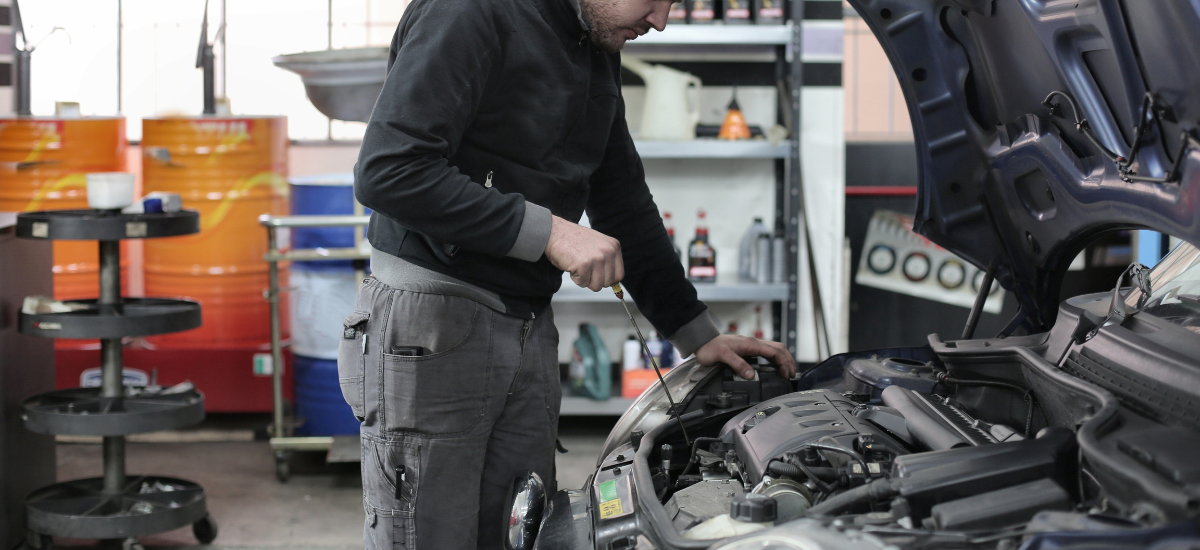
A proper diagnostic assessment gives you a stronger basis for deciding. Ask what was tested, what the confirmed fault is, which work is needed for safety, and what repairs may be approaching. Request a written estimate and ask the mechanic to explain what the repair is expected to solve. For a major decision, a second opinion may also be worthwhile.
A professional mechanic in Maryhill can inspect the vehicle and explain the findings before you commit to a repair. MJ’Z Garage’s diagnostic service is a starting point for identifying the problem rather than guessing from symptoms.
If replacing the car looks like the better option, factor in the condition and total cost of the replacement, not just its appearance or asking price. A pre-purchase inspection can help you understand what a used vehicle may need. Read more about why an inspection matters when buying a used vehicle.
For drivers looking at used cars in Kitchener and around Waterloo, a quality used vehicle may be a practical alternative to taking on the cost of a new one. MJ’Z Garage handles both repairs and quality used-vehicle sales, so we can talk through either route. Our aim is to help you choose what fits your vehicle and circumstances, not automatically turn a repair visit into a sales pitch.
Make the decision with clear information
A major repair can make you feel as if you must choose immediately. You don’t have to decide based on a percentage, a phone estimate, or the fear of spending money twice. Compare the full cost of keeping your car with the true cost of replacing it, consider safety and reliability, and make sure you understand the diagnosis.
MJ’Z Garage Auto Sales is a family-owned repair shop and used-car sales centre serving Maryhill, Ontario, and the Kitchener-Waterloo area. For an honest assessment, free consultation, or quotation, contact us. Drop-ins are welcome, and we’re open six days a week. Let’s work out whether repairing or replacing your vehicle makes the most sense for you.