Imagine leaving your Maryhill driveway on the first genuinely cold morning of the season. The windshield is frosted, the roads are damp, and your car takes an extra second to start. You turn on the defroster, but the glass clears slowly. Then, as you brake at an icy intersection, the pedal feels different.
Winter problems rarely begin in the middle of a snowstorm. More often, they start with a weak battery, worn tires, old coolant, or a maintenance item that was easy to postpone in September.
The good news is that you do not need to replace everything on your vehicle before winter. You need to identify what is worn, unsafe, or overdue: and leave the rest alone. This practical fall checklist will help you prepare your car without paying for work it does not need.
1. Inspect Your Tires Before the First Snow
Your tires are the only part of your vehicle touching the road. In winter, that small contact patch has to manage snow, slush, standing water, ice, and sudden braking. Think of your tires as your car’s winter boots: if the soles are worn smooth, no amount of confidence will create traction.
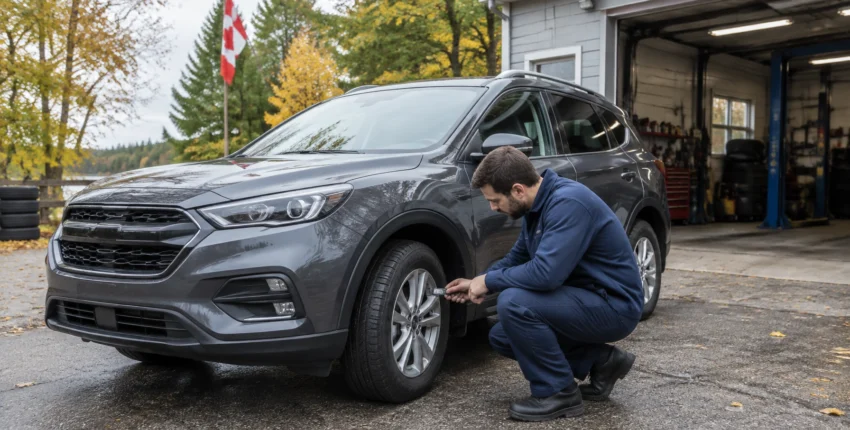
Check tread, pressure, and damage
Before winter arrives, inspect all four tires for:
- Uneven tread wear
- Cracks, bulges, or punctures
- Tread that is approaching the wear bars
- A spare tire with low pressure or damage
- Different tire types or significantly different tread depths
Cold temperatures reduce tire pressure, so check your pressure when the tires are cold and follow the specifications on your vehicle’s door-jamb label: not the maximum pressure printed on the tire sidewall.
If you use winter tires, inspect them now rather than discovering a problem when the tire shop is booked solid. Winter tires generally remain more flexible in cold temperatures than all-season tires. Many Canadian tire professionals recommend installing them when temperatures consistently fall below approximately 7°C, though your driving conditions and schedule should also guide the decision.
MJ’Z Garage provides tire and wheel services in Maryhill, including tire repairs, replacement, rotation, and wheel alignment.
2. Test the Battery Before It Leaves You Stranded
Imagine turning the key on a frigid morning and hearing only a slow click. A battery that worked acceptably in September may not have enough strength to start your engine in January.
Cold weather makes the engine harder to crank while reducing the battery’s available power. If your battery is around three to five years old, or if you have noticed slow starts, dim lights, or electrical issues, it deserves a proper test.
What to check
Look for:
- Corrosion around the terminals
- Loose or damaged battery cables
- A swollen, cracked, or leaking battery case
- Slow engine cranking
- A battery warning light on the dashboard
A battery test should be paired with a charging-system check. Replacing the battery will not solve the problem if the alternator is failing to recharge it properly. At MJ’Z Garage, battery and electrical testing helps identify whether the issue is the battery, alternator, starter, wiring, or another component.

3. Check Coolant and Antifreeze Protection
Coolant does more than prevent overheating in July. It also protects your engine and cooling system from freezing during an Ontario winter.
A low coolant level may indicate a leak. Old or incorrectly mixed coolant may not provide the freeze protection your vehicle needs. Never open a hot radiator cap; allow the engine to cool completely before checking the coolant reservoir.
Look for warning signs
Have the cooling system checked if you notice:
- A low coolant level
- Sweet-smelling odours
- Puddles under the front of the vehicle
- Overheating or temperature fluctuations
- Cracked hoses or loose clamps
- Weak cabin heat
The correct coolant type and service interval depend on your vehicle. Do not mix products based only on colour, and do not assume that topping up will fix a leak. A proper inspection can determine whether the system needs a simple adjustment, a leak repair, or scheduled coolant service.
4. Replace Worn Wipers and Use Winter Washer Fluid
Good visibility is not optional when darkness comes early and road spray covers your windshield. Wiper blades that merely smear water in October can become nearly useless against slush and road salt.
Replace blades that:
- Streak or leave clear gaps
- Skip across the glass
- Squeak loudly
- Have split or hardened rubber
Fill the washer reservoir with winter-rated fluid rather than summer fluid or plain water. Choose a product rated for temperatures that suit Ontario winter conditions, and keep an extra jug at home if you drive frequently.
Also clean the inside and outside of the windshield. A film on the interior glass can make glare from headlights significantly worse.
5. Have the Brakes Inspected Before Roads Become Slippery
You do not want to discover weak brakes while approaching a slippery intersection. Braking systems should be checked before winter, especially if you hear squealing or grinding, feel vibration through the pedal, or notice that the vehicle pulls to one side.
A proper brake inspection can assess:
- Brake pad thickness
- Rotor condition
- Caliper operation
- Brake fluid condition and level
- Brake lines and hoses
- Parking brake function
Not every brake noise means you need a complete brake job. Sometimes a noise is caused by surface rust, debris, or a component that needs attention rather than replacement. The important point is to identify the actual cause before the problem affects stopping distance.
Read more about brake repair and service at MJ’Z Garage.
6. Test Every Light on the Vehicle
Shorter days mean more driving in darkness. Snow, fog, and road spray can reduce visibility even further, so take a few minutes to check every exterior light.
Test the:
- Low-beam and high-beam headlights
- Brake lights
- Turn signals
- Tail lights
- Reverse lights
- Hazard lights
- Licence-plate lights
- Fog lights, if equipped
Ask someone to stand outside while you operate the controls, or check the reflections against a garage door. Cloudy headlight lenses and incorrect headlight aim can also reduce how far you can see at night.
7. Make Sure the Heater and Defroster Work Properly
Your heater is not just a comfort feature in winter. The defroster is essential safety equipment because it clears frost, fog, and condensation from your field of vision.
Turn on the heater and test both the front and rear defrosters. Pay attention to:
- Weak airflow
- Air that never becomes warm
- A fan that works only on certain settings
- Windows that keep fogging
- Unusual smells from the vents
- A temperature gauge that rises unusually high
A restricted cabin air filter can reduce airflow and make defrosting slower. Heating problems can also involve the thermostat, heater core, blower motor, coolant level, or electrical controls. A diagnosis is more useful than replacing parts based on a guess.
8. Schedule an Oil Change if You Are Due
Cold starts place extra demands on the engine. Fresh oil with the manufacturer-recommended viscosity helps the engine’s moving parts receive lubrication during startup.
Check your owner’s manual or service records. You may be due for an oil change if:
- You have reached the recommended mileage
- It has been roughly six months since the last service
- You frequently make short trips
- You tow or carry heavy loads
- Your dashboard maintenance reminder is active
- The oil level is low or the engine sounds unusually noisy
If you are looking for an oil change in Maryhill, MJ’Z Garage can check the oil level, inspect for leaks, and use the specification appropriate for your vehicle. An oil change should not automatically turn into a list of unrelated repairs. If something else needs attention, you should receive a clear explanation and an upfront quote first.
You can review MJ’Z Garage’s oil change and maintenance services.
9. Pack a Winter Emergency Kit
Even a well-maintained vehicle can encounter a collision, road closure, flat tire, or unexpected breakdown. Keep a winter kit in the vehicle before the weather turns severe.
Useful items include:
- Warm blanket, gloves, hat, and extra clothing
- Flashlight with spare batteries
- Booster cables or a portable jump starter
- Small shovel
- Ice scraper and snow brush
- First-aid kit
- Reflective warning device
- Bottled water and non-perishable snacks
- Phone charger or power bank
- Traction material such as sand
- Extra winter washer fluid
Keep your fuel tank at least half full during winter travel, particularly before longer trips or severe-weather warnings. If your vehicle has a block heater, inspect the cord for damage before you need it.
For more winter driving preparation, review CAA’s winter car care guidance.
Do What Your Vehicle Actually Needs
The purpose of a fall inspection is not to create a long repair bill. It is to separate urgent safety concerns from routine maintenance and items that can wait.
At MJ’Z Garage Auto Sales, we believe in straightforward advice, transparent pricing, and repairs based on evidence: not pressure. Our fully licensed and certified mechanics work on all makes and models, and we can help with tires, batteries, brakes, heating systems, diagnostics, oil changes, and scheduled maintenance.
If you are in Maryhill or the Kitchener-Waterloo area, contact MJ’Z Garage to arrange a winter-readiness inspection, oil change, or free consultation and quotation. Prepare early, address the issues that matter, and head into Ontario winter with a vehicle you can trust.